Disaster Risk Reduction
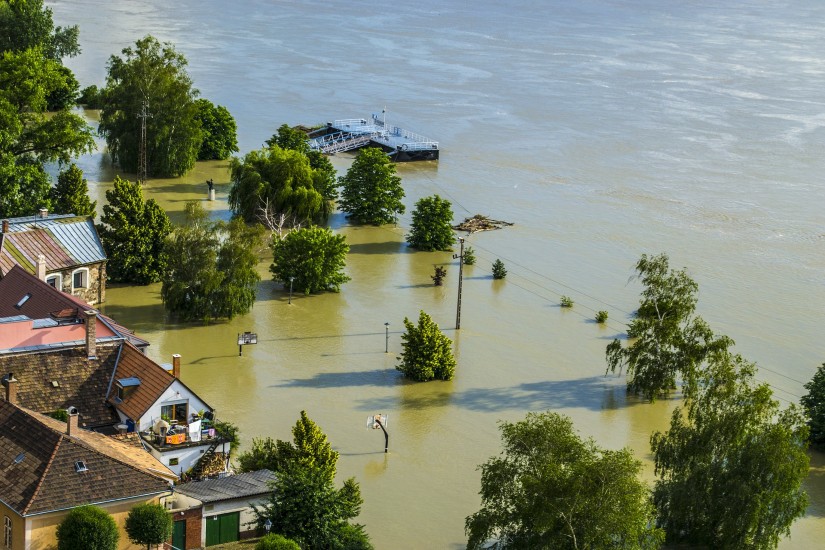
Climate change and disaster risk reduction are closely linked. Disaster risks have risen over recent decades, and more extreme weather conditions in future are likely to increase the number and scale of disasters. In the absence of countermeasures, climate change will affect many sectors that are directly relevant to disaster risks, including water management, food and agriculture, industry, human settlement and land use, health, and even national security.
Natural hazards by themselves do not cause disasters—it is the combination of an exposed, sensitive, vulnerable, and ill-prepared population (e.g. adaptive capacity) or community with a hazard event that results in a disaster. Climate change will therefore affect disaster risks in two ways: 1) through the likely increase in weather and climate hazards and effects of sea-level rise; and, 2) through the increases in vulnerability of communities to natural hazards resulting from ecosystem degradation, reductions in water and food availability and changes to livelihoods. Planning for countermeasures to such disasters requires state-of-the-art tailored climate information to address weather-related risks.
Our core services for to support Disaster Risk Reduction efforts include:
- Development and dissemination of local weather and climate data
- Improvement of sub-seasonal and seasonal weather prediction systems
- Regional high-resolution maps of temperature and heatwaves
- Downscaling of climate change scenarios
- High-resolution modelling of site-specific weather and climate extremes
- Cross-sectoral climate analytics
- Climate hazards, vulnerability, and risk assessments for adaptation planning
- Climate change impacts assessment
- Flood mapping and flood risk assessment
- Drought modelling and management plan formulation