Climate Change Adaptation and Resilience Planning
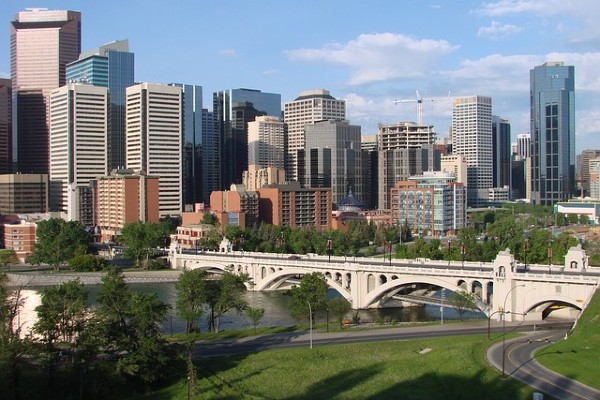
Building Community and Business Resilience in the Face of Climate and Global Environmental Change
Climate change presents a much greater threat and uncertainty to communities and businesses. Climate change vulnerability and risk assessments is an important step in the process of identifying appropriate adaptation measures. In practice a more detailed assessment is likely to require the use of high-resolution maps and specific local area models. Technical specialists will need to clearly define the level and resolution of data required to analyse the issues sufficiently.
There is a growing interest of federal agencies (e.g., Infrastructure Canada), public financial institutions, commercial banks, and insurers in seeing evidence that developers of physical assets and infrastructure have integrated climate resilience and mitigation measures into the project as a prerequisite for funding/insuring investments. Recently, governments and development agencies have invested considerable effort to develop methodologies and tools (e.g., PIEVC protocol, ICLEI) to screen their projects for the risks posed by climate change. However, these tools have largely been developed by the climate change community and their application within actual project settings remains quite limited.
As awareness increases, so does the need for capacity building and training. In many cases, communities are inhibited not by a lack of will, but by a lack of technical expertise and knowledge that prevents them from effectively planning and putting necessary initiatives and policies in place. The desire for positive change is there, but the ability lags behind. Therefore, the provision of guidance and transfer of know-how is critical as provinces ad communities prepare to tackle and overcome the impacts of climate change. With the appropriate tools, decision makers are better equipped to integrate development and climate change and produce effective risk management plans.
CLIMALOGIK’s work focuses on enhancing the climate resilience of communities, integrating climate adaptation into corporate and institutional adaptive planning, and formulating science-informed and evidenced-based adaptation action plans. We conduct strategic climate risk and vulnerability assessments of a range of infrastructure assets (e.g., transportation systems, energy system infrastructure, water and wastewater systems, information, communication and technology systems, and buildings). We develop and implement adaptive Risk Assessment Methodology Frameworks to identify region-specific climate change impacts, and identify and assess risks, vulnerabilities, and opportunities, and conduct comprehensive assessments to identify and assess the key risks, vulnerabilities, and opportunities that climate change could bring. Doing so will lessen the costs of these changes to provincial governments, municipalities, Indigenous communities, businesses, and families, and increase resilience to future climate impacts. We provide actionable climate data and information that supports decision-makers at provincial and local levels in making decisions that promote low-emission climate-resilient development.
Our areas of expertise include:
- Selection of Appropriate Climate Scenarios and Models
- Identification of Project-based Future Climate Planning Horizons (e.g., 2050s, 2080s)
- Integration of Climate Data Sources and Indices into Risk Assessment Frameworks
- Climate Lens Assessment: Climate Change Resilience Assessment
- Climate Change Impacts, Sensitivities, and Hazards Modelling:
- First pass risk screening
- Second pass risk assessment
- Third pass (detailed) risk assessment
- Best Practices, Codes, Guidelines and Tools for Climate Change Vulnerability and Risk Assessments
- Adaptation Options Identification, Appraisal, and Action Planning
- Climate Science Research, Training, and Capacity Building