Integrated Water Resource Management Planning
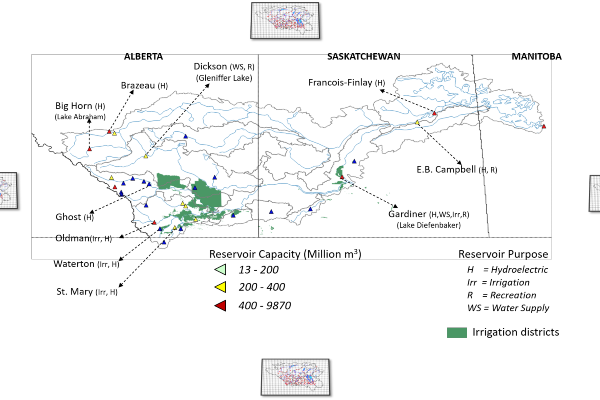
We Develop Practical and Holistic Solutions to Optimise Water Supply, Water Quality, Flood Protection, and Sustainability Through Our Integrative, Participatory, and Adaptive Approach and Extensive Expertise
Many watersheds around Canada—particularly on the Prairies are facing increasingly complex water crises. These crises can only begin to be addressed in an effective and sustainable manner if we begin to transition to more integrated and adaptive forms of water resources planning, management and governance. For the last quarter century there has been an emerging acceptance and use of integrated water resource management (IWRM) across the water sector. Adaptive Management (AM) has been identified as an important extension of the IWRM approach due to the additional benefits it can provide by embracing uncertainty. An integrated and adaptive approach to water resource management, where the decision-making focus is coordinated, cross-sectoral, participatory as well as adaptive, will be cost-effective, achieve desired benefits for the community, and comply with evolving local, state, and federal regulations.
With over 37 million hectares of land under cultivation — 80% of Canada’s farmland, the Prairies are Canada’s agricultural powerhouse. Though agriculture is a major contributor to GDP in this region, its practice has had major environmental harmful impacts on water quantity (e.g., via irrigation) and quality (e.g., via fertilizer/nutrient loadings). Non-point-source pollution of freshwater resources because of widespread land management practices in the Prairies involve complex, and poorly understood environmental pathways and interactions.
In response to the above challenges, CLIMALOGIK helps clients meet these challenges by assembling multidisciplinary teams of respected and experienced professionals known for their innovative work in integrated water management. Our scientists and engineers specialize in efficient water allocation, river basin planning, stakeholder engagement strategies, pollution control, monitoring systems, economic, institutional, and financial management instruments as well as knowledge transfer to make informed and transparent decisions for development and sustainable management of water resources (both quantity and quality).
Our areas of expertise include:
- Small-To-Large Scale Water Resources Systems Modelling
- Water Allocation and Prioritisation
- Reservoir Simulation Modelling
- Water Evaluation and Planning
- Watershed Adaptation Strategies to Climate Change
- Water Resources Management Scenario Analyses
- Water Policy Analysis
- Integrated Watershed Management