Built Environment
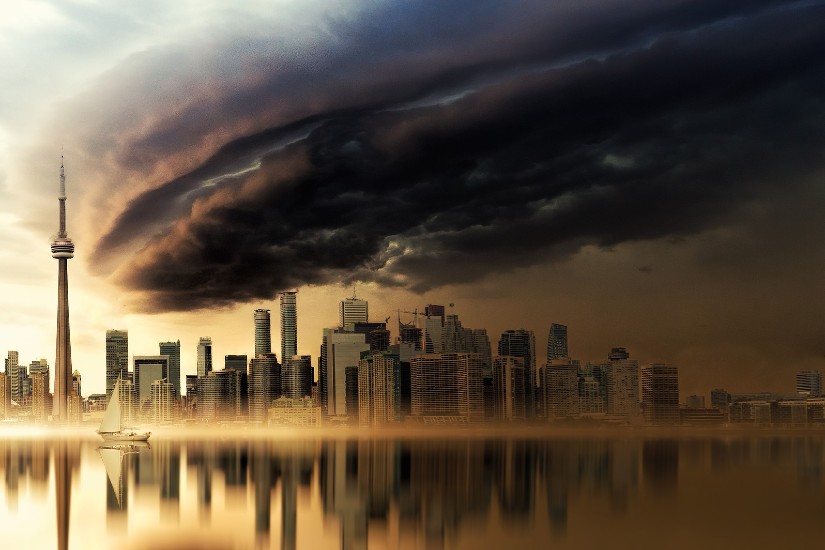
Climate change presents a significant challenge for built environments in northern regions. Its effects will likely intensify over the coming decades. The urban environment issue has become one of the most important within the overall context of global change and development of response strategies. The scale of the devastation to urban populations and economies caused by extreme weather events in recent years highlights their vulnerabilities. Adaptation will almost certainly be required to cope with these effects. Recent extreme events in Canada have provided insight into what continued climatic change might mean for urban areas throughout the country—floods affecting management and road systems, degradation of permafrost threatening the integrity of building structures, more extreme weather events inundating coastlines and disrupting essential services. It is now clear that actions must be taken to address the present and future negative impacts of climate change through adaptation. We support the viability of urban systems by providing tailored climate indicators and impacts modelling for hazard and risk assessments, and adaptation programming.
Our core services for the Built Environment include:
- High-resolution climate data for public security planning
- Improvement of weather risk information Early Warning Systems
- Hydrometeorological forecasting and model development
- Downscaling of climate change scenarios data
- Tailored climate impact drivers data (e.g. climate hazard indices)
- High-resolution modelling of site-specific weather and climate extremes
- Hazards, vulnerability, and structured risk assessments
- Estimation of design storms and flows under climate change conditions
- Estimation of Probable Maximum Precipitation
- Computation of Probable Maximum Flood
- Hydrology and water resources modelling