Team
Home > Team
Climalogik’s team comprises highly qualified professionals with world-renowned scientific and engineering backgrounds, and extensive experience in cold regions hydrology, water resources, climate science, data analytics, scientific computing, economics and finance, policy analysis, and sustainable development. Founded on the principle that with the right methods and team, Climalogik brings diversity to safeguard our water resources and communities in the face of climate and environmental change.
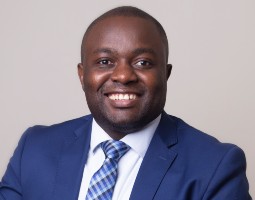
Dr. Elvis Asong
President and CEO, Principal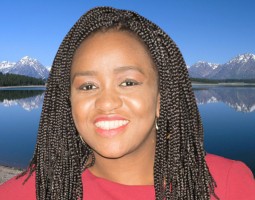
Marvel Emefeut, B.Acc., CPA.
Accounting Specialist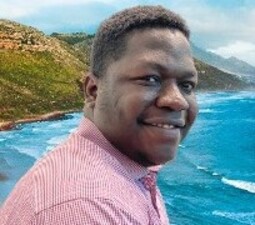
Oghenekevwe Oghenechovwen
Climate Services Specialist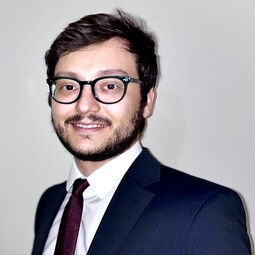
Dr. Pouya Khalili
Hydrology and Water Resources Specialist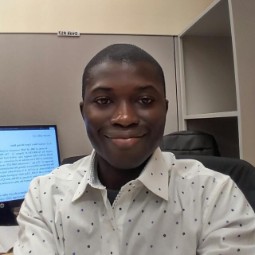
Dr. Richard Agyeman
Director of Climate Intelligence and SolutionsAbout Dr. Elvis Asong
Dr. Asong has over 15 years of experience in the climate change and water resources sector. His perspective lies in the thoughtful integration of science in solving challenging climate and water resources security problems of any space and time scales. He has led a range of hydrology and water resources modelling projects, and environmental impact assessments for critical planning efforts in the infrastructure design, hydropower generation, water management, oil and gas, forestry, agriculture, and recreation sectors in Canada.
He is at his best setting the vision and strategy while helping clients ranging in scale from rural community organizations, engineering, and environmental firms, up to provincial and territorial governments to navigate climate and water security problems in practice through science-led integration. He is a strong proponent of structured climate and water security risk assessments, and thoughtful application of technical climate data towards practical stakeholder needs.
Elvis earned his Ph.D. from the University of Saskatchewan’s Global Institute for Water Security in 2016, and a master’s in Water Resources Engineering from Lund University in Sweden. Born in Cameroon, he has been living and travelling abroad since 2009. This international experience has shaped his thought on regional climate and water resources problems in cold regions such as Canada.
Dr. Asong’s expertise in cold regions hydro-climatology and water resources is also recognized throughout the climate modelling, water resources and environmental sustainability communities and academic sector. He is an Adjunct Professor in the Global Institute for Water Security (https://water.usask.ca/about/profiles/people/zilefac-elvis-asong-.php), University of Saskatchewan where he conducts research on hydrological impacts of climate change for major river basins in Canada. He is an Associate of the Climate Risk Institute (https://climateriskinstitute.ca/2020/10/02/elvis-asong/) and previously sat on the Board of Directors for the Canadian Water Resources Association, Saskatchewan Branch. He is currently a member of the Canadian Meteorological and Oceanographic Society (CMOS) and Bow River Basin Council (Science Committee). His academic and leadership excellence has earned him many outstanding honours, awards and scholarships, including:
- Certificate of Outstanding Contribution in Reviewing, Advances in Water Resources, 2018
- Best Doctoral Thesis in Water Security Research Award, Global Institute for Water security, University of Saskatchewan, Canada, 2016
- Canada Excellence Research Chair in Water Security Postdoctoral Award, 2016
- Saskatchewan Innovation and Opportunity Scholarship, 2014
- Outstanding Student Poster Award, Canadian Geophysical Union/Canadian Water Resources Association Joint Congress, Saskatoon, Canada, 2013
- European Union Erasmus – Mundus Lot 10 Scholarship, 2009
- Undergraduate Excellence Award, Minister of Higher Education, Cameroon, 2008
He served as an Expert Reviewer on the latest Intergovernmental Panel on Climate Change (IPCC) Assessment Report (AR6), Working Groups I (assessing the physical scientific basis of the climate system and climate change) and II (Impacts, Adaptation and Vulnerability). He is an invited speaker at many national and international conferences and a reviewer for many scholarly journals.
About Marvel Emefeut, B.Acc., CPA.
Marvel is a self-motivated and result-oriented accounting specialist with 5 years of experience in corporate accounting. She graduated from the University of Buea in 2014 with a Bachelor of Accounting degree and is a Chartered Professional Accountant (CPA).
She has accumulated significant accounting and bookkeeping experience for small and medium size companies in real estate development, construction, technology, and investment sectors, working with a mix of private, public, and not-for-profit organizations.
About Oghenekevwe Oghenechovwen
Kevwe has over 5 years of experience in the Technical Climate Applications Development space at national, regional, and international levels, with emphasis on weather, climate and hydrological services delivery, climate change resilience, end-user sector engagement, and science-policy interfaces. At Climalogik, Kevwe is a specialist resource for historical data, trends, indices, climate projections, maps, research results, model output, tools, and methodologies to support climate change decision-making, including infrastructure design, adaptation planning, hazard mapping, risk assessments, land and water use permitting, environmental assessment, contaminated sites management, resource management, agriculture, and reclamation. He is adept at collaborating with end-users in weather and climate-sensitive sectors to establish information needs and to translate hydrometeorological and climate data into easily understood and decision-relevant high quality information products. He possesses practical knowledge and ability to work with, and lead, technical cross-sectoral teams to develop and implement these services, including training end-users in utilizing climate services. He helps stakeholders identify and explore relevant opportunities to address climate change specific to their circumstances and use context-appropriate climate information to ensure the effects of climate change are being considered in their decision-making.
Kevwe uses computation and analysis workflows to make sense of climate and environmental data for sustainable development, and to meet both market and policy needs of companies, decision-makers, and other users across various human and socio-economic sectors. He is also involved in climate outreach and public literacy activities, helping highlight the relevance of climate information, starting conversations about solutions, and inspiring communities to collectively act on climate and prepare for change.
Kevwe completed a Master’s Degree in Earth and Ocean Sciences (SEOS Climate Modelling Group) from the University of Victoria, Canada, in 2022, and holds a Bachelor’s Degree in Meteorology from The Federal University of Technology Akure, Nigeria. For his Master’s thesis, he used climate model simulations to study how plausible changes in the ocean circulation of heat in the Atlantic Ocean could impact regional climate and precipitation extremes in a warmer world. Kevwe has also completed training in Media and Information Literacy, and Intercultural Dialogue (UNESCO); and on Estimating GHG Emissions and Carbon Sequestration in Agriculture, Forestry and Other Land Use projects (World Bank Group/FAO).
Kevwe is driven by curiosity and his commitment to contribute his ideas and talents to produce actionable knowledge on climate that informs policy and practice. This motivation to help solve emergent climate risks and threats to sustainable development has underpinned his work experience and training in computation, geo-data science, research and development, communications, and outreach. He was previously a research and policy analyst with The Sixth Avis, where he co-led stakeholder consultations; and contributed content analysis to inform agricultural planning and low-cost environmental data collection designs, as well as extreme value analysis towards the development of West Africa’s first coastal multi-hazards dashboard (https://earwac.com) — which was based on Earth Observation datasets and jointly funded by the European Space Agency and Future Earth ahead of COP26. He participated in COP24 as an observer and Global South Scholar, funded by the Norwegian Ministry of Climate and Environment. Kevwe also worked briefly with the Nigerian Institute for Oceanography and Marine Research, under the Group on Earth Observations’ Blue Planet Initiative, where he helped improve access to weather and climate information for various stakeholders and end-users.
As a member of the Development Team of the Ocean Knowledge-Action Network between 2017 and 2020, Kevwe assisted in identifying actionable themes and influencing participation of early career professionals, by engaging an international ocean and climate community of partners through surveys and open dialogues. He understands the environmental and climate action landscape having contributed to related reports and initiatives of the Economist Intelligence Unit, The Green Institute Nigeria, Wellbeing for Women Africa, South African Institute of International Affairs, The International Telecommunication Union, American Geophysical Union, Sustainable Ocean Alliance, IOC/UNESCO, Commonwealth Correspondents, UN MGCY, and UN-Oceans.
Kevwe is a member of the Canadian Meteorological and Oceanographic Society and the American Geophysical Union. He enjoys group travels, fiction, memoirs, board games, and memes.
About Dr. Pouya Khalili
With a decade-long record of accomplishment in the dynamic field of hydrology and water resources engineering, Dr. Pouya Khalili stands at the forefront of addressing complex environmental challenges. His profound expertise encompasses a broad spectrum of specialties including hydrologic and water systems modeling, comprehensive climate change analysis, and the intricate interplay between climate change and water resources management. Dr. Khalili’s expertise lies in mathematical modeling and prediction in the areas of hydrology and water resources, hydro-meteorological forecasting, and climate change impacts on water resources. This experience includes calibration, validation, and application of a variety of hydrological and hydraulic models in addition to development of model codes.
Dr. Khalili has orchestrated numerous pivotal hydrology and water resources modeling projects, spearheading environmental impact assessments with significant implications for economic and environmental sustainability, and disaster risk reduction. Among his notable achievements are the hydrologic modeling project for the Nelson River Basin, leading-edge climate model downscaling, and innovative climate risk analysis in the same pivotal region. His initiatives have extended to the creation of a novel system for automated calibration in hydrologic modeling, reflecting his commitment to precision and efficiency in environmental stewardship.
A 2023 Ph.D. graduate in Hydrology and Water Resources Management from the University of Alberta, Dr. Khalili has made substantial contributions to the field during his postdoctoral tenure at the Watershed Science and Monitoring Lab (WSML). His work has centered on harnessing future climate datasets for hydrologic modeling, a pursuit that required the coordination of interdisciplinary teams and the transformation of complex climate data into actionable insights. His meticulous approach to enhancing data quality through advanced geospatial adjustments, downscaling, and sophisticated statistical analysis has set new standards in the discipline. His doctoral research shed light on the reliability of global breadbasket regions in the face of unprecedented global warming and socioeconomic change. Focusing on the Canadian Prairies, Dr. Khalili’s studies have been instrumental in understanding the delicate balance of water resources that sustain Canada’s vast agricultural exports. His forward-looking analysis has provided clarity on the future of hydrological processes, crop production, and virtual water trade under extreme climatic conditions.
Dr. Khalili leads Climologik Inc.’s Hydrology and Water Resources division and brings an unwavering commitment to excellence. His expertise is not confined to theoretical models but extends to the development of highly accurate hydrological assessments to meet our clients’ needs. He directs and supports a wide variety of cross-sectoral surface water management projects, including hydraulic and hydrological analyses, drought and flood forecasting, extreme precipitation event analyses, climate change impacts on hydrology, water supply analyses, and flood mapping. His strategic approach in securing funding through proposal responses is integral to our mission of enabling climate adaptation and promoting efficient disaster recovery. He is actively present in the academic community where he provides thought leadership on strategic projects helping communities to determine appropriate disaster mitigation and adaptation solutions.
About Dr. Richard Agyeman
Dr. Richard Agyeman is a meteorologist, climate scientist, and policy analyst with over a decade of experience in climate research, modeling, and applied intelligence. As Director of Climate Intelligence and Solutions at Climalogik Inc, he leads the company’s efforts to transform complex climate data into actionable insights that drive climate resilience, adaptation planning, and sustainable decision-making across industries and regions.
At Climalogik, Dr. Agyeman oversees the development and operationalization of the company’s Climate Intelligence Engine, a state-of-the-art analytical framework that integrates advanced climate science, geospatial analysis, and artificial intelligence. Through this platform, he ensures that organizations have access to meaningful climate indicators, risk insights, and scenario projections that inform policy, infrastructure planning, and investment strategies. He also provides scientific leadership on projects assessing climate hazards, hydroclimatic impacts, and regional vulnerability, translating cutting-edge research into practical tools that deliver tangible outcomes.
Dr. Agyeman’s career includes extensive experience in operational meteorology and climate services. He served in progressively senior roles at the Ghana Meteorological Agency, supporting the implementation of the Weather Research and Forecasting (WRF) model for public weather forecasting and contributing to international climate reporting under the UNFCCC. His expertise spans regional climate modeling, agroclimatic indices, compound climate events, and decision-support analytics, allowing him to bridge scientific research with real-world applications.
He earned his Ph.D. in Environment and Sustainability from the University of Saskatchewan, focusing on climate change impacts on agroclimatic indices in Western Canada using convection-permitting climate simulations. He also holds an MPhil in Meteorology and Climate Science from Kwame Nkrumah University of Science and Technology and a B.Ed. in Mathematics from the University of Education, Winneba.
A published researcher in leading journals, including Climate Dynamics, Quarterly Journal of the Royal Meteorological Society, and Anthropocene, Dr. Agyeman actively contributes to international climate initiatives. He has served as Vice Focal Point for Research and Earth System Modelling with the World Meteorological Organization (WMO) Regional Association IV and as a member of the WMO Expert Team on Research and Modelling.
At Climalogik, Dr. Agyeman combines his international experience, scientific expertise, and leadership skills to ensure the company delivers robust, evidence-based climate intelligence solutions. He is committed to making climate data accessible, actionable, and transformative, enabling clients to anticipate climate risks, strengthen resilience, and achieve sustainability goals at every scale.